Artist Statement | Alessia Sersanti
"My work explores what exists beneath the visible surface—the emotional, spiritual, and energetic forces that shape our inner life. I am interested in atmosphere rather than depiction, in what lingers rather than what declares itself. Through layers of paint, texture, movement, and increasingly through sound and technology, I explore ways of translating what cannot be seen into something deeply felt.
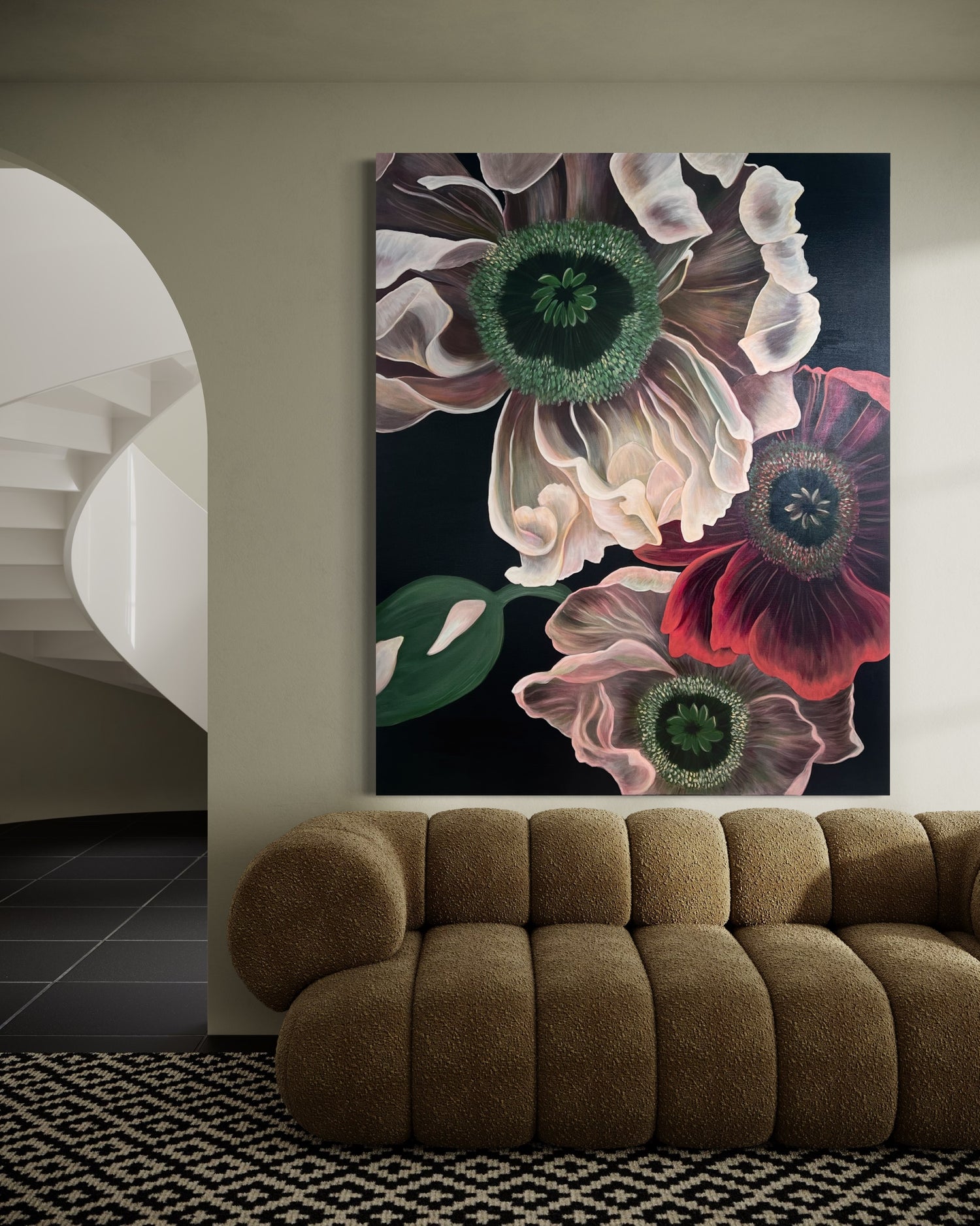
Trained in the discipline of Renaissance technique and guided by an intuitive approach to abstraction, I move between structure and instinct, abstract and figurative elements. I am drawn to contrasts: softness against weight, stillness within movement, light emerging from darkness, the tangible and the ethereal. Botanical forms, natural textures, and the mystery of the cosmos appear throughout my work—not as illustrations, but as vessels for presence, growth, fragility, transformation, and our relationship with the unknown.
Working primarily in oils and acrylics, I build each painting through layers—applying, removing, and allowing the surface to evolve. Texture becomes memory. Color becomes tension. What remains is a record of both intention and surrender. I see the creative process as a conversation between intention and discovery, between what I bring to the work and what the work reveals in return.
My visual language is shaped by the architectural gravity of Rome, the light and terrain of the Pacific Northwest, and the sensory imprint of travel. These geographies inform how I understand space—as both physical and psychological—and continue to shape my fascination with nature, human connection, and the universe beyond our reach.
As my practice expands across painting, sound, and new technologies, I remain interested in the point where technology becomes not a replacement for human expression, but another instrument through which emotion, imagination, and identity can take form.
Ultimately, I create to connect. A painting, for me, is not an answer but an opening—a pause, a breath, a space where viewers may encounter their own associations, memories, and quiet recognitions. If the work holds you longer than expected, then it has begun its conversation."
Notice what you’re still thinking about.
That’s often where the conversation begins.